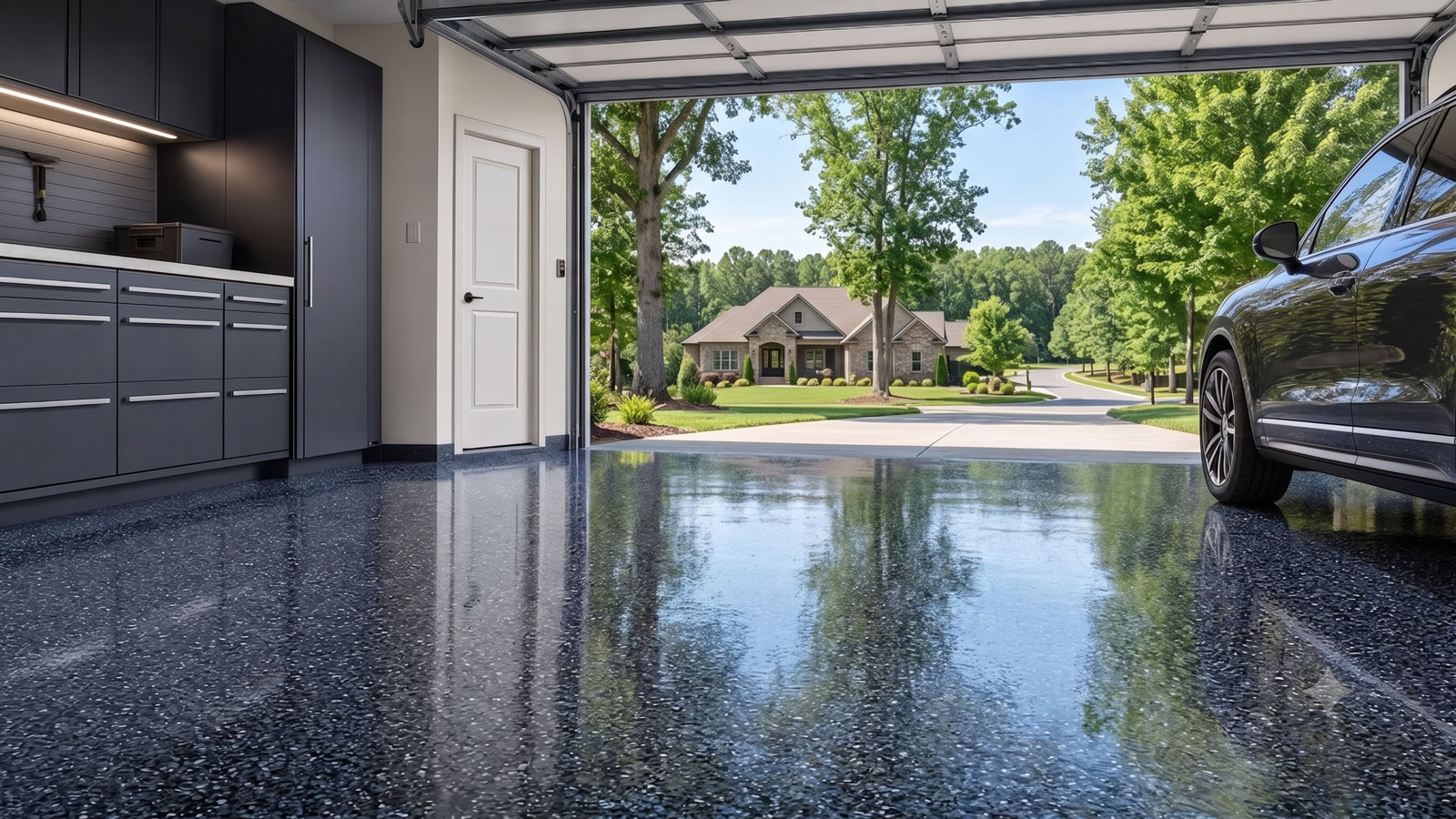
Garage Floor Coating in Columbia, SC
Floor Coating Services in Columbia, SC
Garage floor coating in Columbia should start with how the floor is used in multiple older city neighborhoods and later residential expansions. Columbia publishes a list of intersections known to flood during heavy rain. This is documented local context, not evidence that every garage is wet or damaged. A homeowner comparing epoxy and polyaspartic systems should first identify existing paint, oil spots, repaired concrete, door edges, and the amount of vehicle and storage traffic.
The city's 2015 flooding led to a long-running flood-recovery program. Its public-works division asks residents to keep yard debris away from storm drains. Rain blown under an open door, runoff entering at a low threshold and moisture rising from a slab are not the same problem. If the floor stays damp after the driveway dries, ask for an assessment before deciding on a coating specification.
A practical Columbia proposal also addresses parking, storage and older painted concrete. Flooring work should be scoped around the actual slab, not an assumed construction year or a claim that local waterways automatically predict a property's drainage.
Local Market Insight
Its public-works division asks residents to keep yard debris away from storm drains. This local distinction is relevant when water from sudden thunderstorms, actual driveway slope and dense urban garage access, but each concrete floor still requires its own inspection before any coating is recommended.
What Affects the Cost of Garage Floor Coating in Columbia?
A Columbia project price should reflect the observed floor, not just advertised square footage. In multiple older city neighborhoods and later residential expansions, old paint, repaired joints or dense concrete may require different grinding and patching work. Separate necessary preparation from decorative upgrades.
The time required also depends on parking, storage and older painted concrete, whether the driveway permits equipment access, and how stored belongings can be moved. The city's 2015 flooding led to a long-running flood-recovery program. Local policies cannot replace a property inspection.
- Prior surface treatments: Garages across multiple older city neighborhoods and later residential expansions may contain previous paint, sealers or old coatings. Check the actual surface, then ask which materials must be removed and what mechanical profile will support the new finish.
- Water and runoff: Columbia publishes a list of intersections known to flood during heavy rain. That civic fact makes drainage a valid discussion topic, but it does not prove problems at a house. Inspect door seals, driveway grade and lasting dampness before deciding on substrate work.
- Cracks and patching: Concrete can have shrinkage cracks, movement joints or old repairs independent of neighborhood age. Identify actual damage and distinguish cosmetic repairs from movement that a coating cannot prevent.
- Garage size and edges: Measure around steps, shelving, parked equipment, wall joints and any sloped apron. Complex edges and restricted grinder access may change labor even for similar-size garages.
- Flake and topcoat finish: Decorative flake blends, texture and sheen affect appearance, traction and cleanup. Compare a system specification rather than assuming every epoxy or polyaspartic label describes the same installation.
- Humidity and curing: The Midlands' warm, humid weather can influence installation scheduling and condensation risks. Ask about the manufacturer's temperature and moisture requirements and when parking, storage and older painted concrete can resume without damaging the finish.
Call for a clear, project-specific estimate — or request one online.
Columbia Drainage Context and Real Garage Moisture
Columbia publishes a list of intersections known to flood during heavy rain. The city's 2015 flooding led to a long-running flood-recovery program. These are specific features of Columbia's local water-management context, and they help explain why a homeowner might think about storm runoff. They do not establish that a garage is in a floodplain or that water vapor is moving through its concrete. A coating contractor needs evidence from the actual floor and exterior approach.
Its public-works division asks residents to keep yard debris away from storm drains. Drainage infrastructure serving public roads may be maintained by a city, county or another jurisdiction, but the garage door, gutter configuration and driveway slope are household-level issues. During a heavy rain, watch where water travels. Standing water outside the door may call for grading or drainage work before surface coating is considered.
Inside the garage, look at where dampness appears and when. Puddles following a wet vehicle are different from dark areas that remain after several dry days. Note previous blistered paint, powdery residue, repaired cracks and any recurring water at the threshold. No municipal plan can diagnose those conditions. An installer should explain what moisture checks are appropriate before specifying an impermeable resin layer.
Preparing Columbia Concrete for a Lasting Finish
For multiple older city neighborhoods and later residential expansions, surface preparation should begin with history rather than assumptions. A slab may be newer than the residence or have different repair sections. Check for curing compounds, old coatings and household spill residues. The contractor should identify the true substrate instead of relying on a neighborhood's construction era.
Mechanical grinding is normally part of preparing sound concrete for a resin system. Ask which areas need old-coating removal, how pits and cracks will be handled, and whether a previously patched section needs separate attention. A glossy finish by itself says little about the condition of the bond beneath it.
The local setting also changes how a homeowner uses a garage. Where parking, storage and older painted concrete, plan a clear area for tools and equipment, access to wall edges and a temporary parking arrangement. Warm weather may speed some cure reactions but installation still must follow the manufacturer's application windows; excessive moisture or poor surface prep can undermine the result.
- Check previous paint and concrete sealer.
- Identify cracks, control joints and repair patches.
- Observe actual rainfall entry at the threshold.
- Discuss vapor or lingering dampness if seen.
- Plan storage moves and driveway access.
- Obtain a written cure and cleaning schedule.
Frequently Asked Questions
Does Columbia's drainage system tell me if my garage is wet?
No. Columbia publishes a list of intersections known to flood during heavy rain. This describes public conditions, not an individual slab. Inspect driveway slope, door seals and moisture that persists without a wet car before ordering a coating.
What is different about preparing a Columbia garage?
The preparation depends on the concrete actually present in multiple older city neighborhoods and later residential expansions. Old paint, sealing products, cracks and repairs can change grinding and patching. A contractor should document observed work rather than infer it from location.
Does humid Midlands weather rule out polyaspartic or epoxy?
No. Both require installation within their respective product instructions. Ask about air and surface temperature, moisture, preparation and cure timing. Humidity alone does not determine the right material for a particular slab.
Can a new coating correct water entering the garage door?
A coating is not a replacement for drainage or grading repairs. When water from sudden thunderstorms, actual driveway slope and dense urban garage access, first observe actual runoff and fix the source of recurring entry. Separate tracked-in puddles from moisture that appears independently.
What should I compare when requesting Columbia estimates?
Compare the floor assessment, grinding, crack repairs, chosen layers, texture, edge details, warranty limitations and return-to-parking time. Ask whether belongings need moving and what cleaning routine the installer recommends.
Columbia Neighborhoods & Local Context
Phone Quote Line
Speak with a floor coating specialist about your project and get a realistic estimate range.
(839) 333-5050Typical Project Cost
$3,000–$5,500
Planning range for a typical two-car garage. Final pricing depends on floor size, concrete condition, preparation work, coating type, and finish options.
Helpful Guides
Other Service Areas